Case study 01 · Cras Ostend · EV charging infrastructure
300 kW of charging power on a 250 kW connection
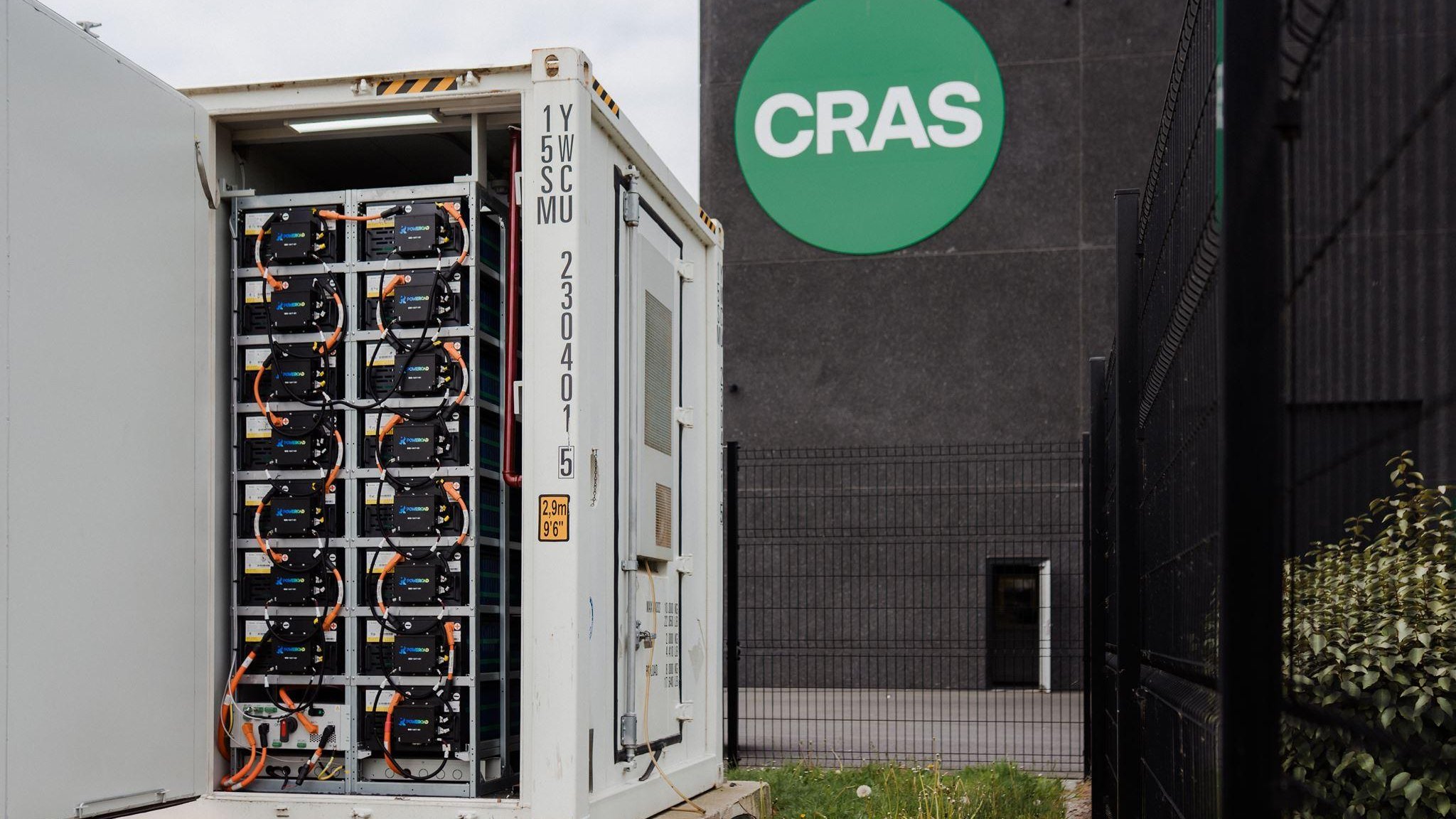
Full-power fast charging, even with limited grid capacity. A 250 kW / 500 kWh battery, intelligently steered by the Voltmasters EMS, makes the difference between drivers who drive on and drivers who come back.
The problem
Curtailment is not an option in a competitive charging market
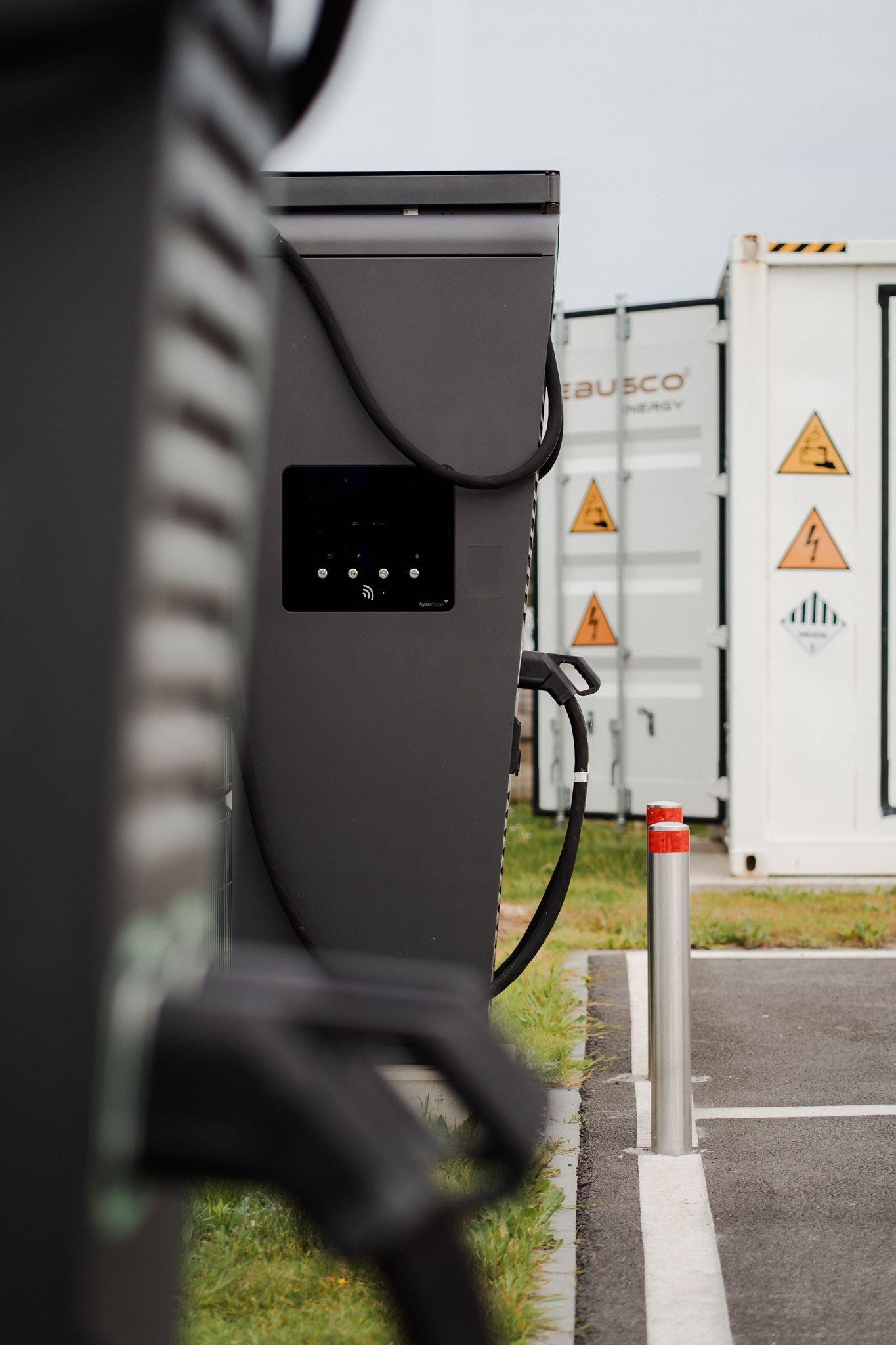
Two Alpitronic HYC150 fast chargers demand 300 kW combined, while the grid connection delivers only 250 kW. A driver who sees 75 kW instead of the promised 150 kW drives on to the next charger, and doesn't come back. Without a smart solution, only bad choices remain:
Expensive grid reinforcement
A heavier connection costs serious money and lead times run up to years.
Power limitation
Capping the chargers at the grid limit means permanently selling less.
Slower charging sessions
Drivers get less power than promised and wait longer.
Loss of market position
Whoever fails to deliver full power loses customers to the competition.
The Voltmasters solution
The battery supplies what the grid cannot
As long as the charging demand stays below 250 kW, everything simply comes from the grid. When both fast chargers demand full power at once, the battery discharges automatically and delivers the difference, up to 300 kW in total. The driver notices nothing: every session gets the promised power.
- Real-time monitoring, of grid load and charging demand, every second
- Automatic steering, the battery covers every power peak by itself
- Market price insight, the battery recharges at the cheapest moments
- Strategic reserves, capacity stays available for balancing services
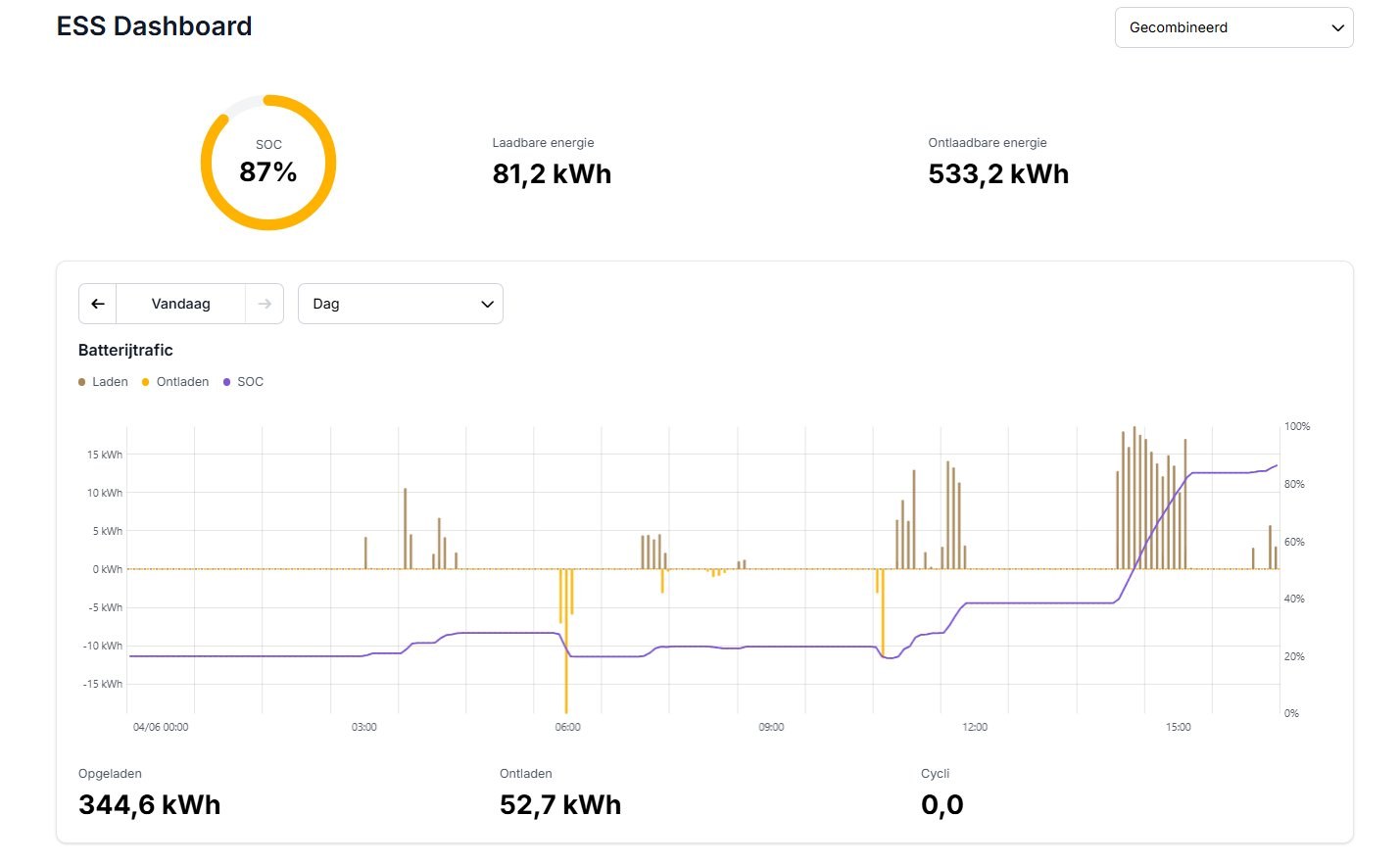
One afternoon at the fast chargers
Power delivered to the chargers, in kW
Extra security and returns
One battery, three roles at once
The EMS continuously tracks how much battery capacity must stay reserved to cover the next charging peak: the Power Boost Reserve. Everything above it is free to earn money.
Role 1 · Power boost
Covering the peaks
When both fast chargers demand full power, the battery automatically delivers the difference between the grid limit and the charging demand. Full power for every session.
Role 2 · Balancing
Earning on the market
The capacity above the Power Boost Reserve delivers balancing services through a trading partner. The battery earns between charging sessions too.
Role 3 · Safety net
Safe when the battery runs low
If the battery does run low, the EMS automatically switches to controlled curtailment. The installation always keeps working safely and stably.
Voltmasters result
300 kW of charging power on a 250 kW connection.
No loss of charging time. No loss of charging experience. No loss of customers. And no expensive, lengthy grid reinforcement.
View all use casesLooking for the technical details and step-by-step configuration? You will find them in our documentation.
Read the documentationReady to make your first project pay off?
Tell us about your next installation. We will show you the platform, help you build the business case and guide you from first quote to certification.
Want to run the numbers first? Try the PV & battery simulator ↗