
The energy market is changing fast. Where telecontrol used to apply mainly to installations from 1000 kVA, today we increasingly see battery systems from 100 kVA falling under telecontrol as well. That raises questions for companies investing in energy storage. What exactly does telecontrol mean? And what role does the Voltmasters EMS play in it?
What is telecontrol?
Telecontrol means that the grid operator can monitor an installation remotely and, if necessary, intervene. This involves reading power, voltage and current values, but also being able to impose power limits or, in exceptional situations, a disconnection.
For smaller installations this was previously not an issue. But the large-scale roll-out of battery systems now has a real impact on the electricity grid, especially in regions where grid capacity is under pressure. As a result, telecontrol is increasingly required at this power level.
Why is the threshold shifting to 100 kVA?
The main reason is growing grid congestion. A battery can both inject and draw power, and therefore actively influences the grid.
In addition, the number of energy storage systems has increased sharply. Where batteries used to be exceptional, systems between 100 and 500 kVA are now the rule rather than the exception. Grid operators therefore want more visibility and control over these capacities.
Flexibility programmes are accelerating that evolution. The electricity grid has to be managed ever more dynamically, and larger installations are being brought into that picture.
What does this mean for a battery project?
When a company installs a battery of, say, 115 kVA, the grid operator may require telecontrol to be provided. That usually implies a telecontrol cabinet, a communication link and the ability to limit power externally.
This has technical and financial impact. It calls for correct integration into the design and a control system that takes external signals into account. Without a considered approach, this can negatively affect the operation of the battery.
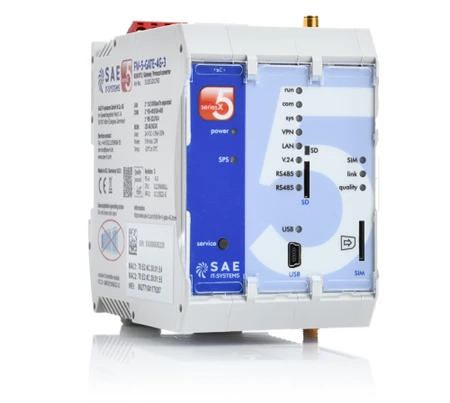
The role of the Voltmasters EMS
At Voltmasters, the Energy Management System is developed with industrial applications and grid integration in mind. The EMS controls the battery not only based on self-consumption, peak power, electricity prices or flexibility, but also takes grid constraints into account.
When telecontrol imposes a power limit, the EMS handles this as a constraint within the optimisation. The battery ramps down in a controlled way, and where needed the interaction with the PV installations is taken into account too. That keeps the installation compliant with grid requirements without unnecessarily disrupting operations.
Is telecontrol always mandatory from 100 kVA?
That depends on the grid operator, the location, the connection capacity and the local grid capacity. In some regions it is not yet a standard requirement, in others it is imposed systematically.
The clear trend, however, is that 100 kVA is increasingly seen as a relevant threshold. Anyone developing a battery project at this power level today is well advised to factor in telecontrol from the design phase.
Conclusion
Telecontrol is evolving from an exception into standard practice for industrial batteries from 100 kVA. By proactively accounting for it in the technical design and the EMS integration, you avoid limitations and unpleasant surprises afterwards.
The Voltmasters EMS is compatible with Fluvius telecontrol. That keeps a battery not only economically attractive, but also technically and grid-wise correctly integrated.