Aurora Energy Research is sounding the alarm. In its study Transmission Grid Fees in Belgium: Outlook & Impact Assessment, the research firm calculates that grid tariffs for a typical Belgian battery project will rise by 92 % by 2035, to 112 euros per kW per year. The study was commissioned by Adaptogen Capital, BayWa r.e., Norther, Otary and Storm. Source: Solar & Storage Magazine, 15 October 2026 (in Dutch).
For installers who fit commercial batteries, that raises an immediate question: does this apply to my customers too? The short answer is no. Better still: for a battery behind the meter, rising grid tariffs make the investment more attractive. Here is why.
What is changing
On 25 June 2026, the federal regulator CREG approved the 2028-2031 tariff methodology for Elia's grid. Elia will publish its new tariffs on that basis in 2027. Two changes weigh heavily on battery parks:
- The exemption disappears. Since 2018, battery parks on the Elia grid paid no transmission tariffs for the first ten years after commissioning. From 2028, that is over. Only projects that signed a connection contract before 15 July 2026 and are commissioned before 31 December 2027 keep their exemption.
- A capacity tariff on injection is introduced. Until now, the power you were allowed to inject was free. From now on, anyone reserving injection capacity pays for it per kW, just as for offtake.
On top of that, Elia's own costs are rising. In Aurora's base scenario, Elia's allowed revenue grows from 1.1 billion euros per year in 2024 to 3.0 billion euros in 2035, mainly because of the grid expansions needed for new connections.
Aurora's figures
- Grid tariffs for a typical battery project: +92 %, to 112 euros per kW in 2035.
- Average annual margin without compensating measures: 47 euros per kW in Flanders and 38 euros per kW in Wallonia.
- The new capacity tariff on injection could reach 11 euros per kW. In Germany it is 4 to 7 euros per kW.
- On energy, Belgian generators already pay 1.10 euros per MWh. France charges 0.40 euros, while Germany, the Netherlands and the United Kingdom charge nothing.
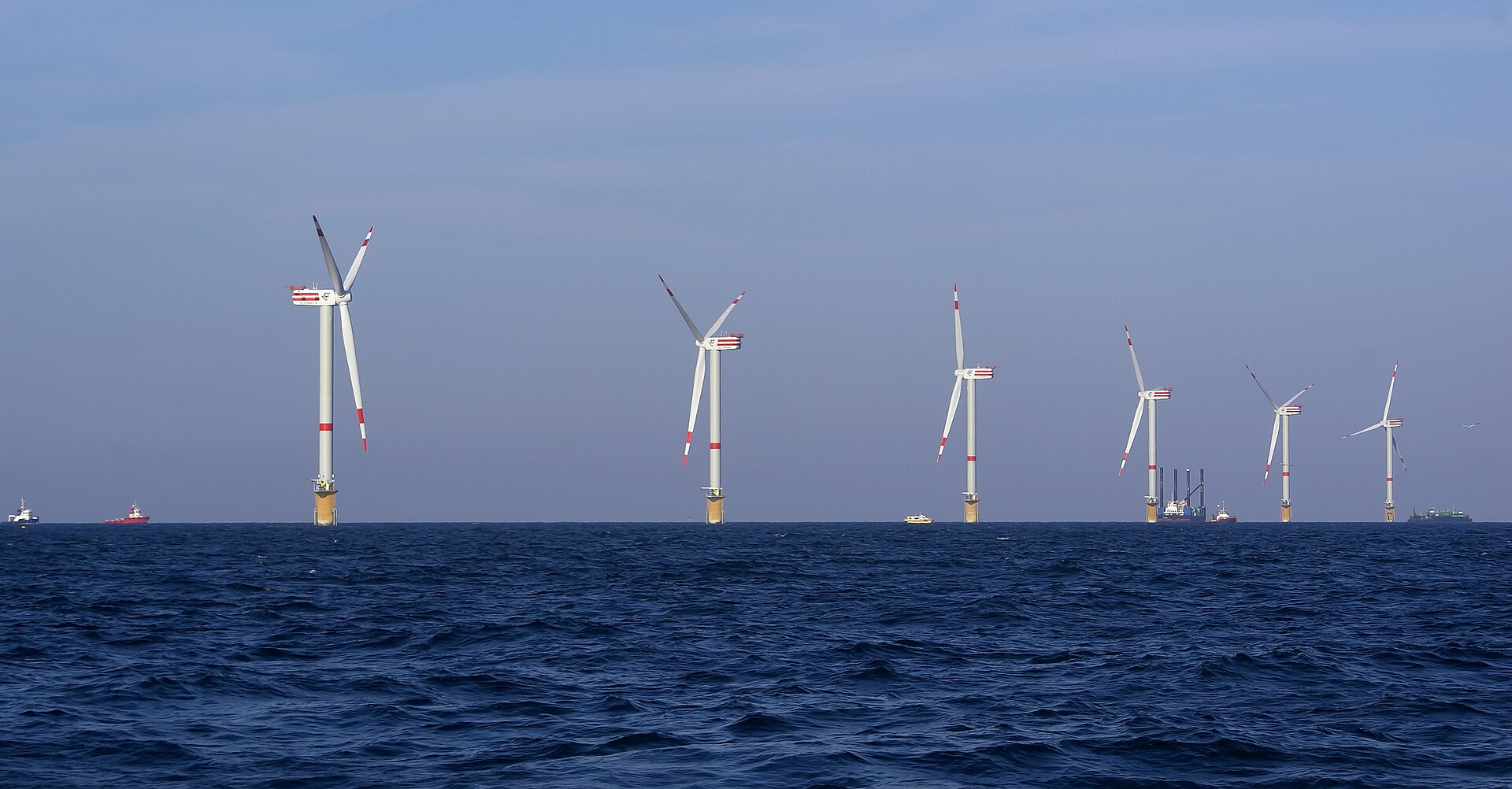
- Offshore wind farms see their tariffs rise by 150 %. Large solar parks are hit as well, because a per-kW tariff weighs more heavily on installations that run fewer hours.
Aurora strongly advises against the capacity tariff on injection and asks policymakers for three things: protect existing and ongoing projects from the new rules (grandfathering), as Germany and the Netherlands do; keep the discount for those who avoid the evening peak; and grant the discount for flexible connections to connections that are made flexible by the grid operator too, not only to voluntarily flexible ones.
That peak discount is significant. According to Aurora, anyone who stays off the grid during the evening peak on weekdays from November to March saves an average of 65 euros per kW per year.
Does this apply to commercial batteries too?
The study and the article speak of "battery projects" without saying which ones. So we checked the CREG consultation report and Fluvius to see which batteries the rules apply to.
The exemption only applied to batteries with their own connection
The ten-year exemption was intended for storage installations with their own access point on Elia's grid, meaning the transmission grid and the grids with a transmission function. These are stand-alone battery parks: a battery with its own connection, with no consumption or generation behind it.
A battery behind a company's meter has no access point of its own. It shares the connection with the site's consumption and possibly its solar panels, and tariffs are calculated on what flows through that connection. Such a battery never had the exemption, so it cannot lose it either.
In Flanders: the same line at Fluvius
There is a favourable regime on the distribution grid too, and it is also reserved for stand-alone batteries. Since 1 January 2025, stand-alone stationary storage systems at Fluvius get a specific tariff: no public service obligations or surcharges, and an 80 % discount on the transmission cost share of the grid usage tariff. The condition is that no other generation or consumption sits on the same access point. Fluvius explicitly states that a battery used for self-consumption, peak shaving or backup does not qualify.
Note that this Flemish discount exists precisely so that stand-alone batteries on the distribution grid are not disadvantaged compared with those on the Elia grid. In its response to the consultation, the Flemish Utility Regulator writes that changes at regional level can also be expected from 2029 if the federal exemption disappears. Anyone planning a stand-alone battery on the Fluvius grid should keep an eye on this.
Indirectly, everyone pays
A commercial battery behind the meter escapes the new battery rules, but not Elia's rising costs. Elia passes its tariffs on to the distribution system operators, and Fluvius includes them in every company's grid tariffs. If Elia's allowed revenue nearly triples by 2035, you will feel it on every bill. Companies connected directly to the Elia grid also pay their share for offtake, and with the new injection tariff, for the capacity they are allowed to feed back as well.
How the injection tariff will filter through to the distribution grid is not yet clear. CREG wants to include the injection capacity of the distribution system operators in the tariff base, but the values and the allocation still have to be determined.
What does this mean for the business case of a commercial battery?
It gets stronger, not weaker. Three reasons:
- More expensive grid offtake makes peak shaving more valuable. Every kW a battery takes off the offtake peak saves a grid tariff that will rise in the coming years. See also our article on access power and peak power.
- CREG wants batteries at existing sites. One of the reasons CREG itself gives for scrapping the exemption is that developers should place their batteries more often at locations that already have consumption or generation, to limit grid congestion. That is exactly what a commercial battery does.
- Stand-alone parks lose an advantage. Anyone installing a battery on an existing connection no longer competes on the energy markets with parks that pay no transmission tariffs for ten years.
There is one caveat. A commercial battery that also trades on the market and draws power from the grid to do so simply pays the full grid tariffs on that offtake. The higher those tariffs, the smaller the margin on every cycle charged from the grid. Charging with your own solar power therefore becomes more attractive than charging from the grid.
Not everything is settled yet
The methodology has been approved, but Elia will only publish the actual tariffs for 2028-2031 in 2027. Aurora's figures are a projection in a base scenario, not official tariffs. Whether the Flemish rules for stand-alone batteries on the distribution grid will follow is still for the Flemish Utility Regulator to decide.
Questions about what this means for your customers' battery projects? Get in touch or read more about load balancing and energy trading with the Voltmasters EMS.
Sources: Solar & Storage Magazine (15 October 2026), Solar & Storage Magazine (19 August 2026), CREG, consultation report on the 2028-2031 tariff methodology, Fluvius, stand-alone stationary storage systems. Photo: Hans Hillewaert via Wikimedia Commons, CC BY-SA 3.0.