From 1 January 2027, electricity storage in batteries counts in the calculation of the E-level (E-peil, part of the Flemish EPB energy performance regulation) and the energy score (EPC) of non-residential buildings in Flanders. At the same time, the way solar panels lower the calculated energy use is changing: the full PV production will no longer count. This was reported by ODE, the Flemish sustainable energy association.
One thing to note right away: the change has not yet been definitively approved. At the time of writing, the Flemish Government had not yet given it approval in principle. The direction is clear, though, and it comes straight from European legislation.
What is changing?
There are two adjustments that go together:
- Storage is recognised. A battery now gets a place in the E-level under the EPB method and in the EPC energy score of non-residential buildings, such as offices, schools and other specific buildings.
- PV only counts for what you consume yourself. Today, the full output of the solar panels is taken into account when determining the E-level. From 2027, only the solar power actually consumed in the building will count.
With this, Flanders is transposing the European Energy Performance of Buildings Directive (EPBD), which requires that energy storage can count towards a building's energy performance.
Why the two go together
As long as the full PV production counts, it makes no difference to the E-level whether the power is used in the building or ends up on the grid. That is now changing. What counts is self-consumption.
And that is exactly where the battery comes in. A battery stores daytime surpluses and releases them when the building needs them. That raises self-consumption, and therefore the share of PV production that counts in the E-level. A building with solar panels and a battery will score better than a building with solar panels alone.
Conversely, a non-residential building with a large PV system and little consumption while the sun shines may score worse in the calculation.
Renewable share: full PV production, provided it can be controlled
For the calculation of the renewable energy share of non-residential buildings, the full PV production does still count. There is one condition: the installation must be able to respond to an external signal.
According to the Flemish Energy and Climate Agency (VEKA), this requirement also follows from the EPBD. It is also a condition for a building to qualify as zero-emission. VEKA will add the functionality to future versions of the EPB software.
How to prove that an installation responds to an external signal has not been settled yet. ODE expects that the presence of an energy management system (EMS), or modern inverters that support smart control by default, will be sufficient proof.
Important for installers
On new non-residential projects, from 2027 the choice of a battery and an EMS affects not only the energy bill, but also the E-level, the EPC score and the renewable share. Take that into account in the design and in your discussions with the EPB assessor, especially for projects with a permit application or handover in 2027 or later.
What about homes?
The change applies only to non-residential buildings. For homes, a battery cannot be counted for now. A reform of the residential EPC and EPB framework is underway, which would integrate and greatly simplify both instruments. PV-Vlaanderen is pushing for batteries and smart control to be included as soon as possible.
What this means for your projects
The rules no longer simply reward "as many panels on the roof as possible". They reward an installation that matches production, storage and consumption. In practice:
- Size for self-consumption. Look at the building's consumption profile, not just the available roof area.
- Consider a battery where surpluses occur during the day. It raises self-consumption and counts in the E-level from 2027.
- Make sure the installation can be controlled. An EMS that can respond to an external signal is probably the easiest way to meet the condition for the renewable share.
The Voltmasters EMS controls PV inverters, batteries and chargers from dozens of brands from a single controller. It maximises self-consumption, responds to external signals such as grid limits and market prices, and keeps the full history. Want to estimate up front what a battery delivers for a given consumption profile? Try our PV and battery simulator.
Frequently asked questions
From when does a battery count in the E-level?
From 1 January 2027, for non-residential buildings. At the time of writing, the change has not yet been definitively approved by the Flemish Government.
Does the full PV production still count?
Not for the E-level: only the solar power consumed in the building itself. For the renewable share it does, provided the installation can respond to an external signal.
Does this also apply to homes?
No. For homes, a battery does not count for now. The residential framework is being reformed, though.
How do I prove that my installation responds to an external signal?
That has not been settled yet. VEKA is adding the functionality to future software versions. According to ODE, an EMS or a modern inverter with smart control should be sufficient.
Next step
Do you have a non-residential project with PV in design or quotation? Then now is the time to include storage and control. We are happy to help: email sales@voltmasters.be.
Source: Opslag erkend in E-peil en energiescore niet-residentieel vanaf 2027, berekening PV wordt aangepast (ODE, November 2026, in Dutch). More on the measure: EPB-pedia, electricity storage (in Dutch).
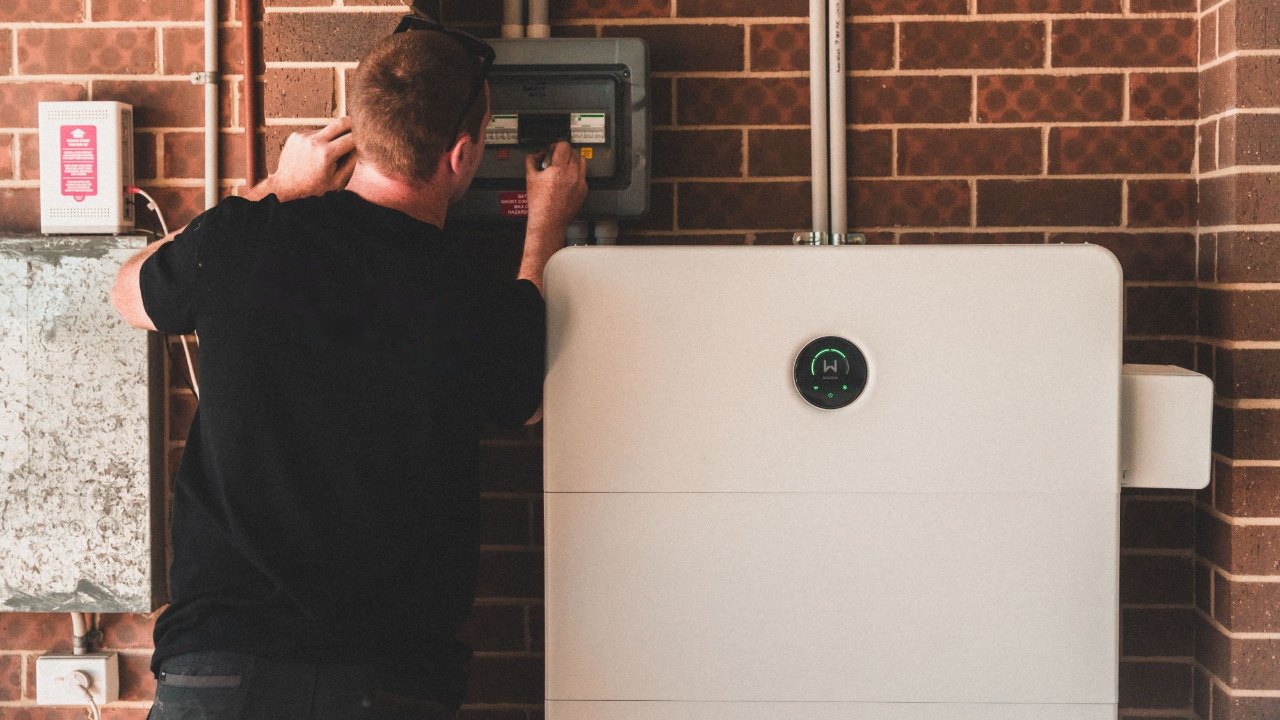
Photo: Elite Power Group via Pexels, edited.