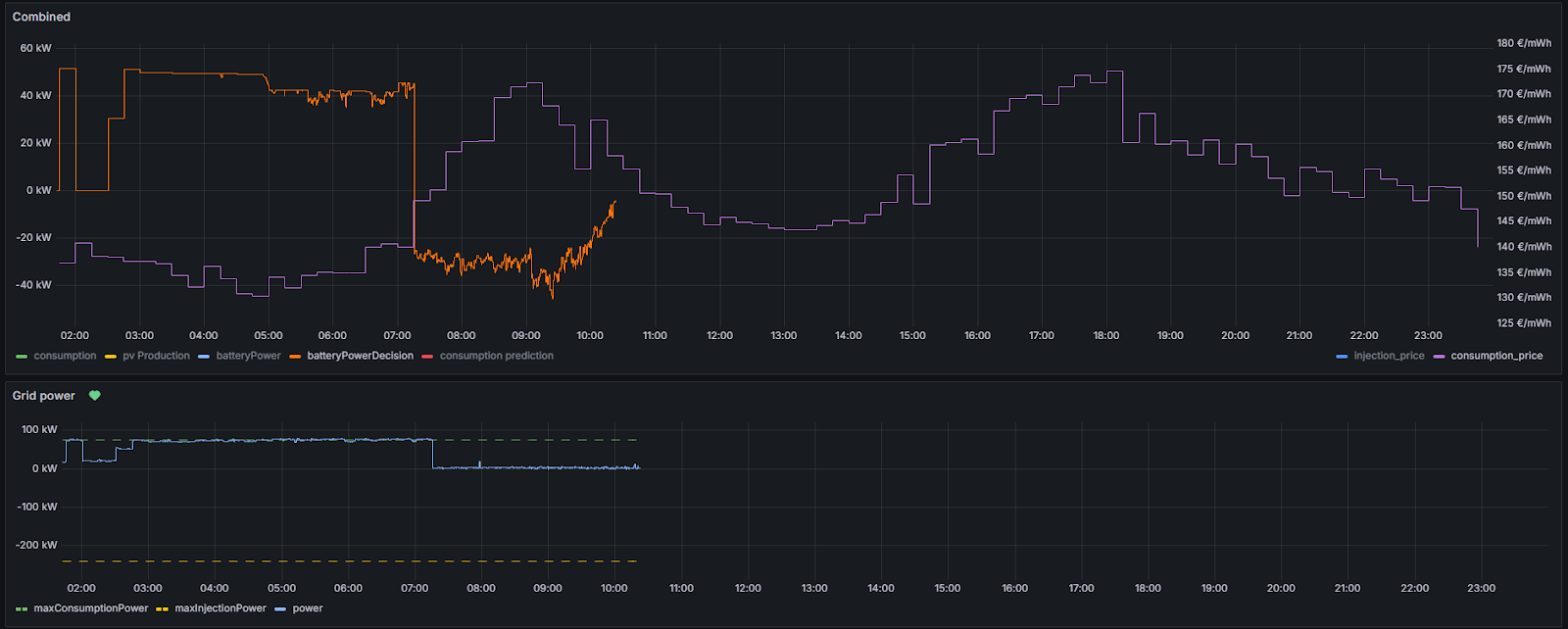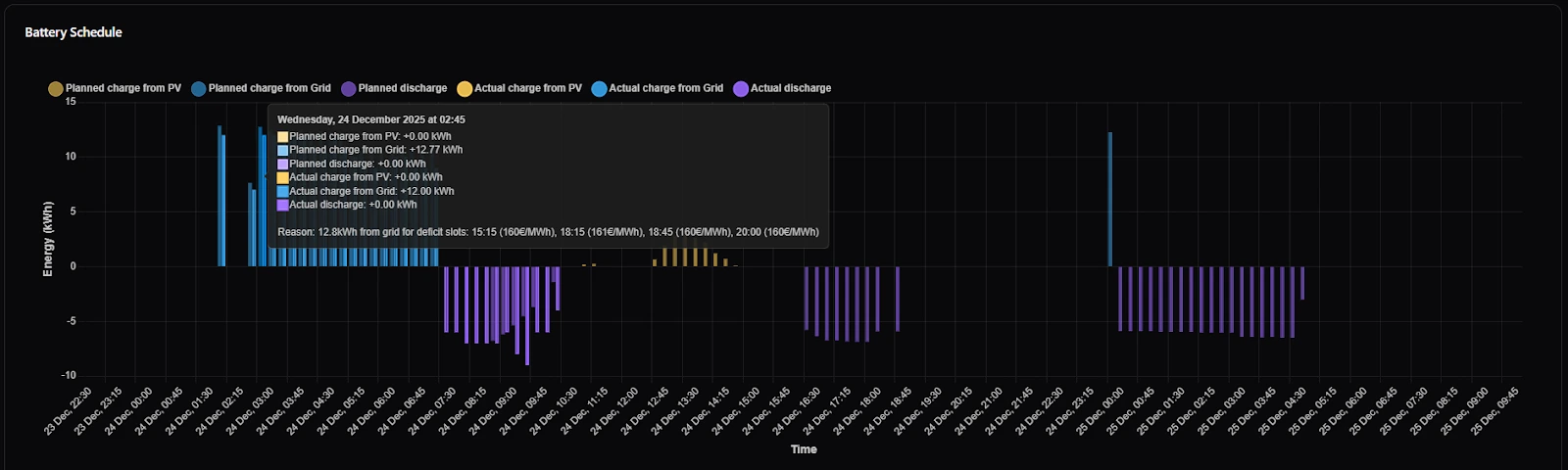
The control algorithm now uses a Battery Schedule: a pre-calculated plan for charging and discharging. The algorithm generates this plan based on the forecast and uses it during the control cycle to make decisions. This leads to better optimisation and more predictable behaviour.
Key improvements
Schedule-based decision logic
- The algorithm now follows a pre-calculated schedule instead of only real-time decisions.
- The action types:
- Idle: no activity planned, the battery can stay at rest.
- Follow scheduled power: follow the planned power exactly (grid charges and trade discharges).
- Compensate production deficit: determine the power itself to compensate a production deficit (discharging).
- Compensate PV surplus: determine the power itself to charge a PV surplus (PV only).
- Charge max capacity: charge at the available maximum power.
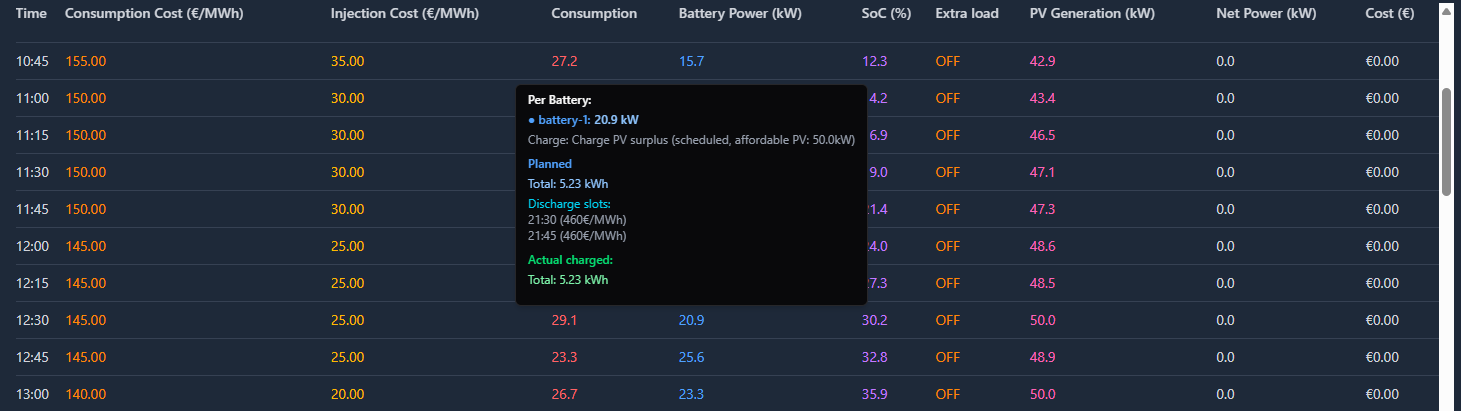
Energy reservation
- The algorithm reserves energy for future expensive time slots.
- A distinction between reserved and non-reserved energy.
- Reserved energy is protected for planned discharges at high prices.
Improved optimisation
- Planning of both PV and grid sources for charging.
- The minimum price difference to use the battery is now configurable at project level.
Efficiency improvements
- Refined round-trip efficiency calculations.
- Better tracking of the battery status between time slots.
- Optimisation of the energy distribution across multiple batteries.
Schedule updates and caching
- The schedule is updated after each time slot, to respond to the actual performance of the past quarter-hour (for example a deviation in PV production or consumption compared to the forecast).
Tracking of planned versus actual values
- A separation between planned and actual energy flows. These are kept for reporting.
Algorithm stability
- Various bug fixes and stability improvements.
Timezone support
- Full timezone support so that the time in the reasons is shown locally.
Aggregation across multiple batteries
- The schedule is aggregated across all batteries for better coordination.
- Better capacity handling with multiple batteries.
In practice

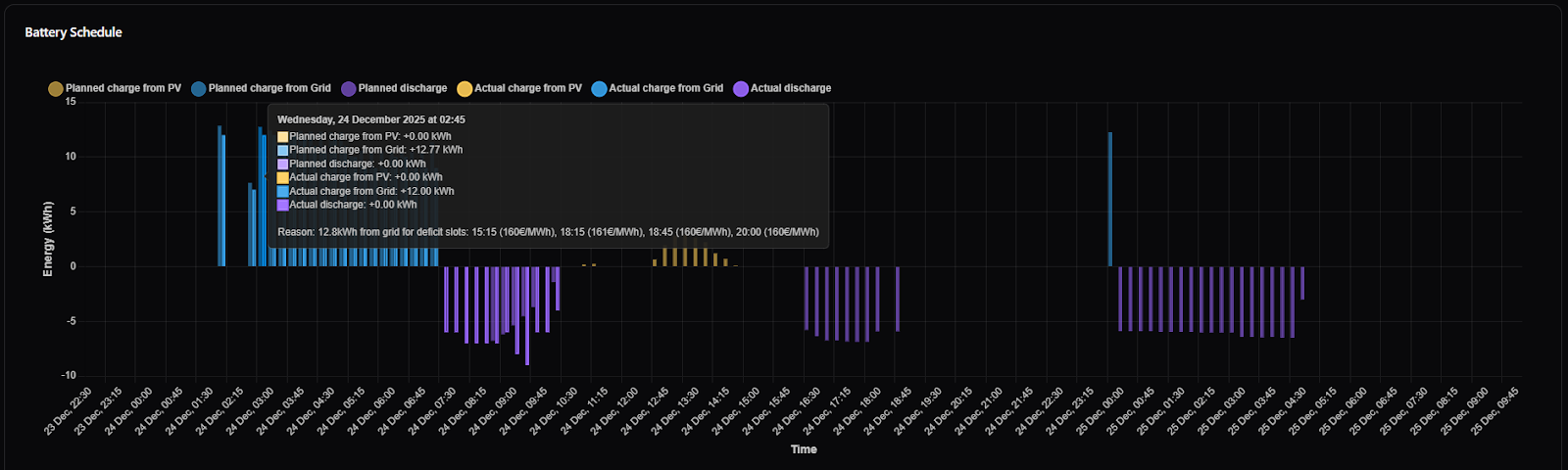
In the graph you see two bars per quarter-hour:
- the amount of energy planned to be charged or discharged;
- the actually executed charge or discharge.
The plan is recreated every quarter-hour, taking the real energy flows into account. In this project you can see that the battery was charged from 2:30 to 7:15, in order to switch to self-supply in the more expensive period from 7:15 onwards. Minimum price difference: 20 €.